
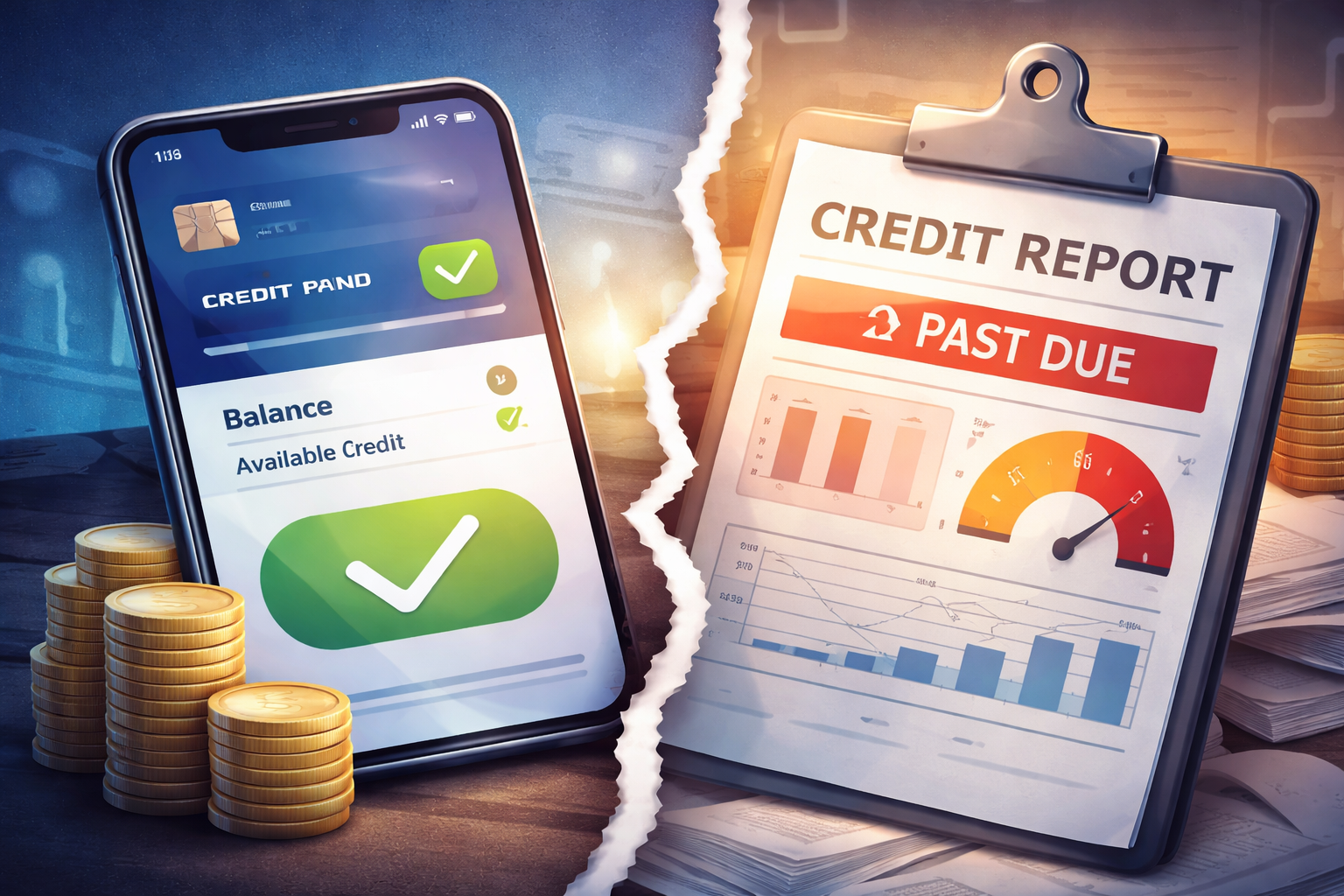
credit card payment reflected on account but not updated on credit report was the exact problem I realized I had only after checking my score for something unrelated. The payment was already there inside the account. The available credit looked better. The balance had dropped. Nothing in the card dashboard suggested a problem anymore. Then I opened the credit report and saw the old late status still sitting there like nothing had changed.
At first I assumed it would correct itself overnight. Then I thought maybe the app had not refreshed. But after checking again, the same mark was still there, and that is the moment this situation changes from annoying to serious. When the account looks fixed but the credit report does not, you are no longer dealing with a simple payment issue. You are dealing with a reporting timeline, and that system moves slower, in batches, and often with less transparency than people expect.
If you want the closest system-level explanation first, this hub gives useful background on how issuers send account status to the bureaus and why timing can feel disconnected from what you see on the card dashboard:
What this problem usually means
When credit card payment reflected on account but not updated on credit report happens, the first mistake people make is assuming the payment failed. In many situations, the payment did not fail at all. It cleared, posted, and reduced the balance exactly the way it should have. The issue is that the payment system and the credit reporting system are not the same thing.
One system updates your live account. The other system prepares status data for the credit bureaus on a separate schedule. Those systems may talk to each other, but they do not move in real time. That is why credit card payment reflected on account but not updated on credit report can exist even when your login screen makes everything look normal.
This is the core distinction that keeps people from wasting time on the wrong fix. If the payment is already visible and applied inside the account, then the next question is not “Did my payment go through?” The next question is “When does this issuer report, what date did they report, and what status had already been locked before my payment was included?”
Why the report can stay wrong even after you paid
credit card payment reflected on account but not updated on credit report usually happens because the reporting timeline has already moved ahead of you or has not caught up with you yet. The credit bureaus do not watch your account live the way you do. They receive account updates in cycles, and those cycles can create delays that feel irrational if you are only looking at the payment date.
In practical terms, several things may be happening at once. Your payment may have posted on Monday. Your statement may have closed on Sunday. The issuer may have already transmitted the old delinquent status before your payment was included. The bureau may then take additional time to process that file. So even though the account is fixed on your side, the report still shows the older condition.
This is why credit card payment reflected on account but not updated on credit report is not automatically proof of an error. Sometimes it is just the natural result of how monthly status reporting works. But the problem is that a normal delay and a real inaccuracy can look almost identical at first.
Quick self-check
- Did the payment actually post, or is it still pending?
- Did the payment arrive before or after the statement closing date?
- Was the late status already visible before the payment posted?
- Has one full reporting cycle passed yet?
- Is the amount paid enough to cure the delinquency status?
The real timing patterns behind this
credit card payment reflected on account but not updated on credit report usually falls into a handful of repeat patterns. Knowing which one you are in makes the next step much clearer.
Branch 1: The payment posted after the reporting snapshot
The account is current now, but the bureau file was created before the payment was included. In this branch, the report often catches up on the next cycle without much drama.
Branch 2: The payment posted, but not enough to change the reported status
This happens when the payment reduced the balance but did not fully remove the past-due condition. The borrower sees progress; the system still sees delinquency.
Branch 3: The issuer updated internally, but the bureau processing has not finished
The card dashboard is current, but the bureau site or monitoring service is behind by several days or longer.
Branch 4: The account status itself is wrong
The payment cured the issue before reporting should have occurred, but the bureau still received or kept inaccurate data. This is where dispute territory begins.
Branch 5: You are looking at a third-party monitoring delay, not a bureau delay
Sometimes the issuer has reported and the bureau has processed, but the service you use to view your report has not refreshed yet.
If your issue overlaps with the account still looking past due even after money moved, this article is the closest supporting read for that internal timing side of the problem:
How issuers usually see your situation
From the consumer side, credit card payment reflected on account but not updated on credit report feels like the system ignored reality. From the issuer side, it may look different. Their staff often see separate timestamps, separate ledgers, and separate reporting dates. So when you call and say the report is wrong, the first representative may only confirm that the payment posted. That does not answer the reporting question you actually care about.
What matters to the issuer is not just whether money arrived. What matters is whether the account status at the reporting cutoff had already changed under their rules. Some issuers report based on a statement-cycle snapshot. Some update after specific account events. Some appear consistent until one late cycle creates a lag that does not disappear until the next bureau file goes out.
That is why a support agent telling you “your payment posted correctly” can be true and still not solve anything. It addresses the account. It does not address the report.
When this is just a delay and when it becomes an error
The line between delay and inaccuracy matters because the wrong move at the wrong time can waste days. credit card payment reflected on account but not updated on credit report is often still a delay if you are within one normal reporting cycle and the payment posted after the last snapshot. In that situation, filing complaints immediately may not help.
But if one full cycle has passed and the outdated delinquent status is still there, the tone changes. If your documents show the payment was posted in time to change the account condition, and the report still carries the old negative status, you may be looking at inaccurate reporting. That matters because inaccurate reporting can affect approvals, rates, and score recovery longer than the original late problem itself.
Another warning sign is when one bureau updates and another does not. That sometimes means the issue is no longer just a consumer-facing delay. It can suggest inconsistent bureau transmission or inconsistent bureau processing.
What to gather before you do anything else
Before you call, message, dispute, or escalate, build a clean record. This situation becomes much easier to fix when the timeline is obvious on paper.
Keep these items together:
- Payment confirmation number
- Exact payment posting date
- Last statement closing date
- Screenshots showing current account status
- Screenshot or copy of the credit report status
- Any message from the issuer confirming the account is current
This is also the point where you should verify whether the problem is pure reporting or a deeper account hold. Some accounts remain restricted or internally flagged even after funds arrive, and that can confuse what gets reported later. If that possibility fits what you are seeing, read this next:
What actually fixes it in the right order
credit card payment reflected on account but not updated on credit report should be handled in sequence, not emotionally. The best fix is usually not the loudest one. It is the one that matches the timeline.
First, confirm whether one full reporting cycle has passed. If not, and the payment posted after the reporting snapshot, the most likely outcome is that the next update fixes it. That waiting period is frustrating, but it is still normal in many cases.
Second, if enough time has passed, contact the issuer with one narrow request: confirm the date the account was last reported and the status reported as of that date. That question is much stronger than asking why your score has not changed. It forces the conversation toward reporting facts instead of generic reassurance.
Third, if the issuer confirms the account is current but the report still shows the old delinquent condition beyond the expected cycle, prepare a formal dispute. Keep the dispute narrow and document-based. Do not write a long emotional history. State what status appears, why it is inaccurate based on dates, and what evidence supports the correction.
Fourth, continue monitoring all relevant bureaus, not just one score app. The app you use may lag behind the bureau itself.
Mistakes that make the damage last longer
There are a few predictable mistakes that turn a manageable reporting lag into a drawn-out mess.
- Assuming a reduced balance means the bureau already received the new status
- Filing a dispute before you verify the reporting cycle
- Making a small payment and assuming the late condition is fully cured
- Using only a third-party credit app instead of checking actual bureau data
- Calling support repeatedly without documenting dates and answers
The worst mistake is passive waiting after the normal timing window has already passed. Once that happens, you are no longer being patient. You are allowing stale negative information to stay active longer than it should.
Key Takeaways
- credit card payment reflected on account but not updated on credit report is often a reporting-cycle issue, not a failed payment
- Your card dashboard and your credit report are driven by different systems
- A posted payment does not guarantee immediate bureau correction
- If one full reporting cycle passes and the old delinquent status remains, it may be inaccurate reporting
- The strongest fix starts with dates, not frustration
- Documentation matters more than long explanations
FAQ
How long can this take to update?
In many situations, it can take until the next reporting cycle. That often means several days to around a month depending on the issuer and the bureau processing timeline.
Does a posted payment automatically remove a reported late mark?
No. If the late status was already reported before the payment was included in the reporting file, the mark may remain until the next update or require correction if it was inaccurately reported.
Can my score stay hurt even if the account looks current now?
Yes. credit card payment reflected on account but not updated on credit report can keep the negative status visible to scoring models until the bureau data changes.
Should I dispute immediately?
Not always. If you are still within a normal reporting window, it may be too early. But if the window has passed and the facts are in your favor, delaying the dispute is usually the bigger mistake.
What to do before this affects the next decision
If you are about to apply for something important, do not assume the report will fix itself in time. credit card payment reflected on account but not updated on credit report is exactly the kind of issue that looks temporary but still damages the next underwriting pull if it sits there long enough.
That is why your next move should be immediate and practical. Check the payment posting date. Check the statement closing date. Check whether one full reporting cycle has passed. If it has not, mark the expected update window on your calendar. If it has, contact the issuer for the reported status date and prepare a dispute package the same day if the facts still do not line up.
And if you want the next article that best extends this situation into the credit-reporting side, start here before the issue grows into a broader reporting problem:
Final note
credit card payment reflected on account but not updated on credit report feels confusing because the part you can see has already improved while the part lenders may see still has not. That gap is what makes people second-guess themselves. But once you separate payment posting from reporting status, the situation becomes easier to read. You do not need to guess what is happening if you force the timeline onto paper.
So do not leave this half-resolved. Pull the dates together, verify the reporting window, and take the next formal step as soon as the normal delay period has passed. That is how you keep a temporary mismatch from turning into a longer credit problem.
Official dispute rights and process guidance can be reviewed here: Consumer Financial Protection Bureau