
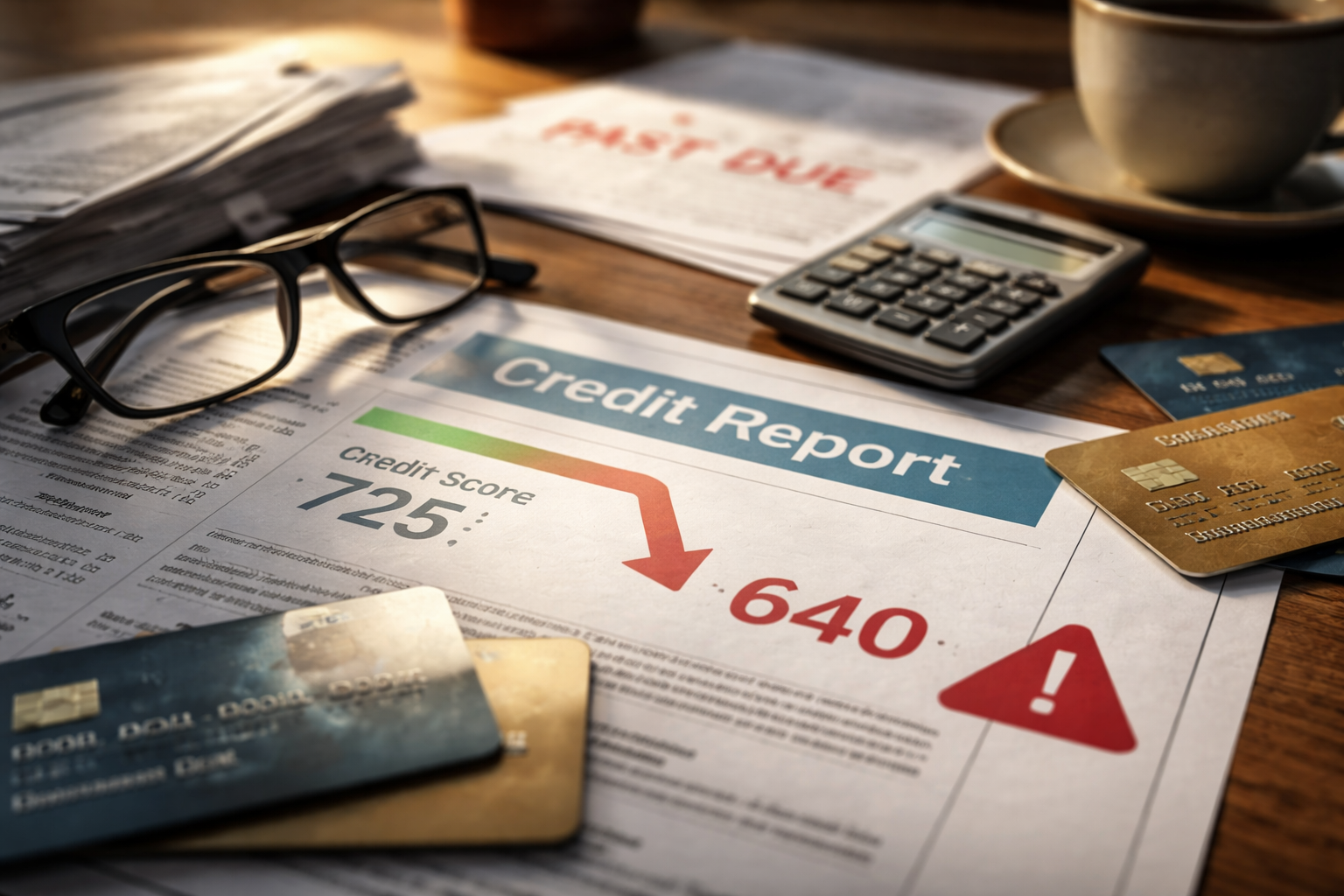
Credit card dispute hurt my credit score — I noticed it in a way that didn’t feel dramatic until it did. I opened my usual score tracker, expecting the normal tiny fluctuation, and instead saw a drop big enough to change how lenders would look at me. It felt backwards: I was disputing something because I thought I was being treated unfairly, and now I was the one paying for it.
I didn’t start with a rant, and I didn’t start with a long “please help” message. I started by isolating what actually changed on my credit report and treating it like a solvable checklist. If credit card dispute hurt my credit score is where you are right now, this guide is built so you can plug your situation into a clear lane, take the next steps today, and stop the damage from spreading.
Important note (YMYL-safe): I’m not a lawyer or a financial advisor. This is educational information based on common U.S. dispute/reporting processes. If you’re dealing with a lawsuit, identity theft, or a high-dollar loss, consider getting professional advice.
Start with your “big picture” hub: If you’re unsure whether you’re dealing with a billing error, a dispute timeline problem, or a reporting issue, this is the cleanest place to map your case quickly.
Key Takeaways
- A dispute itself usually isn’t the direct reason your score fell. The drop typically comes from what was reported during or after the dispute (late mark, utilization spike, account action, or a derogatory entry).
- If credit card dispute hurt my credit score, your fastest win is identifying which “damage source” you’re in and taking the matching steps—without mixing lanes.
- Speed matters most for late marks and collections/derogatory items. Utilization-only drops can rebound quickly if you act before the next reporting cycle.
- Phone calls don’t fix credit reports unless you convert the result into written proof you can submit to bureaus and the furnisher.
Fast Self-Check: What Changed (Not Just the Score Number)
Before you do anything else, answer these with real data (credit report + statement), not assumptions. When credit card dispute hurt my credit score, people lose time by guessing.
- Did a new late payment appear (30/60/90)?
- Did your reported balance jump (utilization spike)?
- Did your credit limit drop or did the account close/restrict?
- Did a new derogatory remark or collections account appear?
Quick reality check: A score drop is a symptom, not a diagnosis. Your job is to find the exact “new line item” that triggered it.
Why This Happens (In Plain English)
When credit card dispute hurt my credit score, it usually traces back to one of these system reactions:
- Reporting reaction: an issuer reports you as past due while the dispute is open, or updates a remark in a way that looks negative.
- Math reaction: your utilization changes because provisional credit was reversed, the balance re-posted, or a refund is delayed.
- Risk reaction: the issuer reduces your limit, restricts your account, or closes it—shrinking available credit and raising utilization.
- Escalation reaction: the issue is sent to a collector or a negative account status is reported (sometimes by mistake).
None of these require you to “argue louder.” They require you to document, choose the correct lane, and apply pressure in the right order.
Choose Your Lane (Do Not Skip)
Lane A — Late mark (30/60/90 days) appeared
You need a reporting correction strategy. If credit card dispute hurt my credit score because of a late mark, treat it as a time-sensitive accuracy problem.
Lane B — No late mark, but utilization spiked
You need a balance and timing strategy. This is often the quickest rebound lane.
Lane C — Limit reduced / account restricted / account closed
You need a stabilization strategy so this doesn’t ripple into more damage.
Lane D — Derogatory remark or collections entry appeared
You need an evidence-first dispute strategy and escalation if they “verify” incorrectly.
The 48-Hour Recovery Plan (Contain First, Fix Second)
If credit card dispute hurt my credit score, the first two days are about stopping additional harm and building a clean case file.
- Pull your credit reports (all three bureaus) and identify the exact new negative item(s).
- Save your dispute proof: dispute confirmation, claim ID, dates, merchant emails, return tracking, screenshots, statement pages.
- Confirm payment behavior: proof you paid the undisputed minimum on time. If autopay failed, save the evidence.
- Check your statement close date: utilization changes matter most at statement reporting time.
- Create a one-page timeline (date, action, proof). This is your leverage.
At this stage, you’re not “asking for mercy.” You’re preparing to prove accuracy errors or explain why the reported data is wrong.
Lane A: Late Mark During/After a Dispute (Deep Branching)
This lane is the most damaging because late marks can follow you for years, even if the original dispute was small. When credit card dispute hurt my credit score and a late mark appears, it usually falls into one of these branches:
Lane A Branch 1 — “I thought I didn’t have to pay during the dispute”
Many people assume a dispute pauses everything. Often it doesn’t. You typically still owe at least the undisputed amount. Your fix is showing you paid what was required, on time, and the late mark is inaccurate or should be corrected.
Lane A Branch 2 — Minimum payment was miscalculated or misapplied
The issuer’s system can apply payments in a way that triggers “past due” even when you paid. Your fix is proving payment amount/date and requesting a correction of the delinquency status.
Lane A Branch 3 — Autopay failed (or payment posted late)
The dispute isn’t the real cause; the payment failure is. Your fix is documentation + request for goodwill correction if appropriate (but don’t rely on goodwill alone).
Lane A Branch 4 — Reporting error while account is “under review”
Review status can create messy updates. Your fix is disputing the accuracy with bureaus and the furnisher, with consistent evidence.
Lane A action steps:
- Step 1: Get proof of payment (bank record + statement + confirmation). One screenshot is not enough; keep at least two forms of proof.
- Step 2: Dispute the late mark with the bureaus: short explanation, attach proof, reference dates.
- Step 3: Dispute with the furnisher (issuer): request a correction of inaccurate reporting and include the same evidence.
- Step 4: If they respond with “verified” but your proof is strong, re-dispute with clearer labeling and a tighter timeline.
If you’re seeing “delinquent” or “past due” incorrectly, this companion page is the closest match and helps you spot the common system errors fast.
Lane B: Utilization Spike (The “Score Drop With No New Negatives” Lane)
Sometimes credit card dispute hurt my credit score even though the report shows no new late marks or collections. That usually means utilization changed. Here are the most common branches:
Lane B Branch 1 — Provisional credit removed
You got temporary credit, then it was removed before you noticed reporting time. Your utilization jumps. Fix: targeted paydown + document the reversal.
Lane B Branch 2 — Refund delay kept the balance high
The merchant “refunded,” but the credit didn’t post before the statement closed. Fix: lower balance before close, then follow up on the missing credit.
Lane B Branch 3 — Pending charge settled at the worst time
A pending charge didn’t drop and then posted before the statement close. Fix: paydown + keep proof the transaction was disputed.
Lane B Branch 4 — Limit reduced (utilization doubles instantly)
Even if your balance stays the same, a limit drop makes utilization spike. Fix: stabilize, pay down, and avoid additional triggers.
Lane B action steps:
- Step 1: Identify your statement closing date and whether the spike happened before it.
- Step 2: Make a strategic payment to reduce reported utilization (even temporary paydowns can help).
- Step 3: Save any notice of credit reversal or limit change, because it explains the timing.
- Step 4: Re-check after the next reporting cycle. If credit card dispute hurt my credit score only because of utilization, the rebound can be fast once the numbers normalize.
Lane C: Restriction, Limit Reduction, or Closure After a Dispute
This lane feels personal because it often follows right after you challenge a charge. If credit card dispute hurt my credit score and you also saw account actions, the score drop can come from reduced available credit, higher utilization, or negative remarks.
Lane C Branch 1 — “Account restricted” while under review
Fix: confirm what was restricted (spending, cash advance, online charges) and whether any remark was reported.
Lane C Branch 2 — Limit reduced unexpectedly
Fix: reduce balances, avoid new disputes on other cards, and request a written explanation for your records.
Lane C Branch 3 — Account closed by issuer
Fix: confirm how it’s being reported (closed by issuer vs consumer) and focus on stabilizing utilization across remaining accounts.
Lane C action steps:
- Step 1: Check your report remarks for that account (closure wording matters).
- Step 2: Lower balances on other cards to prevent a chain reaction.
- Step 3: Keep your documentation file ready. If credit card dispute hurt my credit score because the issuer took action, your best defense is to remain consistent and low-risk on paper.
Lane D: Derogatory Remark or Collections Entry (Most Urgent)
If credit card dispute hurt my credit score and you see a derogatory item or collections entry, don’t assume it will “update later.” Treat it like a fast evidence problem.
Lane D Branch 1 — Collections listed for an amount you already paid
Fix: collect payment proof + dispute accuracy with bureaus and furnisher.
Lane D Branch 2 — Collections listed while the billing dispute was active
Fix: attach dispute ID, dates, and proof that the amount was contested; dispute the listing as inaccurate or premature.
Lane D Branch 3 — Wrong consumer / mixed file / identity confusion
Fix: dispute with clear identity proof and remove the incorrect association.
Lane D action steps:
- Step 1: Dispute with bureaus using short, factual language and evidence labels (date, amount, account).
- Step 2: Dispute with the furnisher/collector using the same story and the same documents.
- Step 3: If you receive a “verified” response that contradicts your proof, re-dispute with a cleaner timeline and tighter attachments.
Official reference (one link only): The CFPB explains how to dispute credit report errors and what to include.
Absolute Mistakes to Avoid (These Keep the Score Drop Alive)
- Stopping payments entirely. Even if you’re furious, keep undisputed amounts current. Late marks are louder than arguments.
- Sending an emotional essay. Long letters get ignored. Short evidence gets processed.
- Changing your story. If credit card dispute hurt my credit score, consistency is how you win accuracy disputes.
- Waiting “to see what happens.” For reporting problems, delay makes it harder to unwind.
FAQ
- Does disputing a charge automatically lower my score?
Usually no. If credit card dispute hurt my credit score, it’s more often a late mark, utilization spike, limit change, or derogatory reporting that caused the drop. - How do I know if it’s utilization vs a negative mark?
Look at the report. Utilization-only drops happen with no new late marks/collections; the balance/limit math changed. - How long does it take to recover?
Utilization rebounds can happen after the next reporting cycle. Late marks or collections corrections depend on how fast inaccuracies are corrected. - What if the issuer sided with the merchant?
That outcome doesn’t automatically justify inaccurate credit reporting. If credit card dispute hurt my credit score because of incorrect reporting, you still dispute the accuracy. - Should I hire a credit repair company?
Many people can handle accuracy disputes themselves if they can document dates, amounts, and payment proof. If the case is complex or legal, consider professional help.
Recommended Reading (Your Next Step)
If you suspect this is turning into a credit report/collections error, this page complements today’s plan without repeating it, and helps you keep the damage from escalating.
The “Do This Today” Checklist
- Pull all three credit reports and identify the exact new negative item(s).
- Build a single evidence folder: statement pages, dispute ID, emails, tracking, payment proof.
- Choose your lane (A/B/C/D) and follow only that lane’s steps first.
- Submit short, evidence-based disputes where accuracy is wrong.
- Lower utilization before the next statement close if that’s your lane.
credit card dispute hurt my credit score is one of those problems that makes you question whether fighting a bad charge was worth it. I had that same moment. But once I stopped treating it like a personal punishment and started treating it like a reporting/math/risk system response, it became fixable.
Here’s your immediate instruction: pull your reports today, identify the exact trigger, and start with the lane that matches your file. If credit card dispute hurt my credit score, you can stop the damage from spreading and push the record back toward accuracy—without blaming yourself for a system reaction you didn’t choose.