
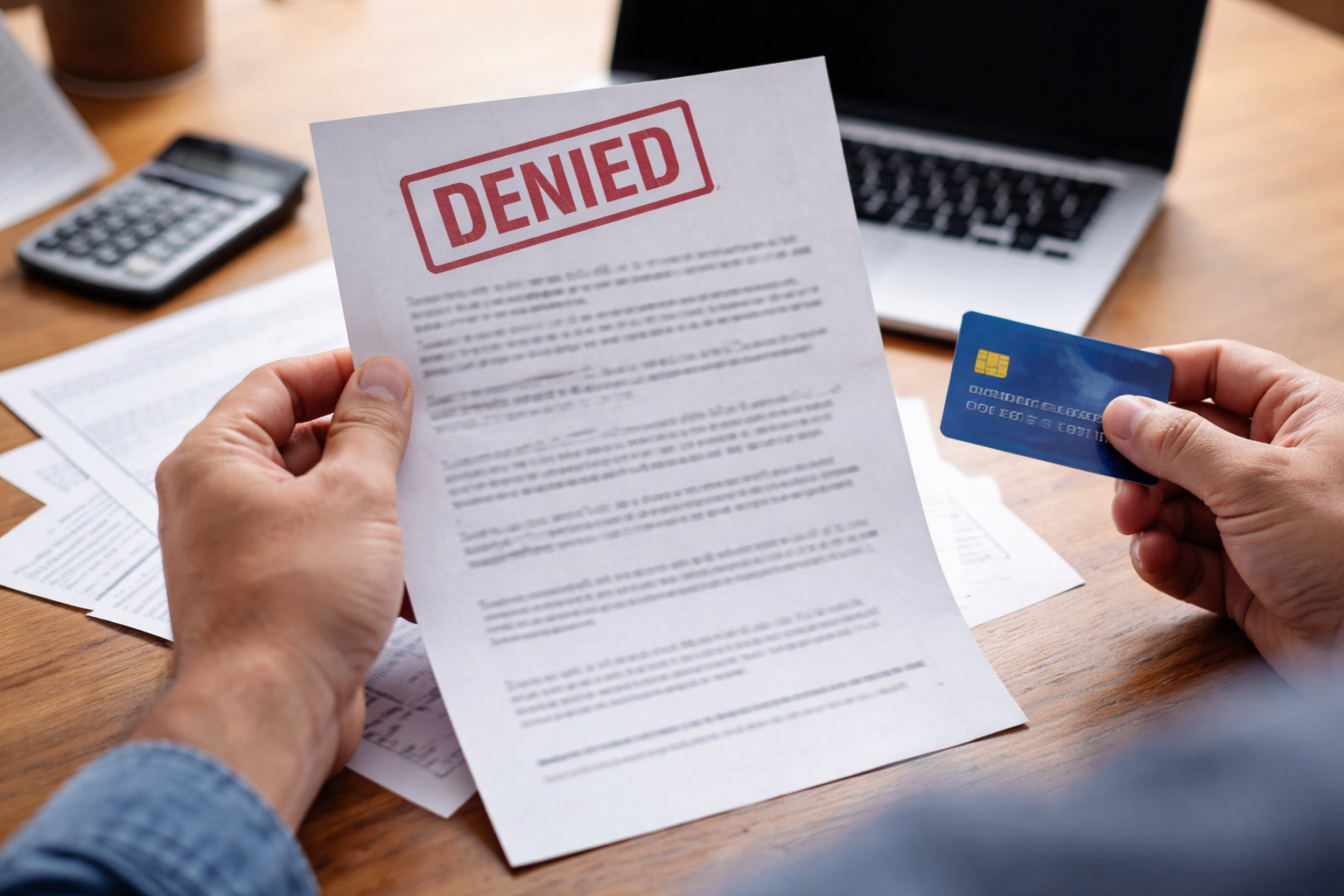
Credit card dispute denied — the words hit harder than the charge itself. I wasn’t checking my account casually. I was doing that tight, automatic scan people do when they’re expecting something to be fixed. The credit was supposed to be back by now. The merchant had “confirmed” it in writing. The amount was not small enough to shrug off. Then the message arrived: denied.
I didn’t panic. I just felt that quiet, practical anger you get when you did everything “right” and the system still says no. In that moment, the real problem wasn’t the money — it was the uncertainty about what step would actually work next.
The Moment You Realize It’s Not Over
The first mistake people make after a denial is assuming it’s final. When a credit card dispute denied notice appears, it usually means the issuer finished one review cycle and accepted the merchant’s evidence under their internal rules. That can happen even when the charge feels obviously wrong from your side.
Denied does not mean “true.” It means “their file looked stronger than yours.” That’s frustrating, but it’s also useful, because it tells you exactly what the system responds to: documentation, timing, and matching the right argument to the right category.
Why Disputes Get Denied in Real Life
Most credit card dispute denied outcomes fall into a handful of patterns. I’ve seen people lose disputes for reasons that had nothing to do with whether they were actually wrong.
- Reason mismatch: You filed it as “fraud” when it was really “services not as described,” or vice versa.
- Thin evidence: Your explanation was accurate, but you didn’t attach the thing that proves it (emails, screenshots, policy, timeline).
- Timing problems: You filed too early (before the merchant’s promised window) or too late (issuer deadlines vary).
- Merchant evidence dump: The merchant submits a receipt, delivery scan, or policy screenshot that looks “complete” even if it’s misleading.
- Ambiguous outcomes: Subscription cancellation, partial refunds, restocking fees, or “trial” terms muddy the record.
The system doesn’t read your mind. It reads your attachments.
How Banks and Merchants Actually “Win” These
After a credit card dispute denied result, it’s tempting to blame the bank for siding with the merchant. But the bank isn’t a court. It’s closer to a referee who checks whether each side submitted something that satisfies a rulebook.
Merchants often win by submitting:
- Order confirmation with your name, email, and date
- Tracking numbers (even if the box was empty or wrong)
- Signed terms or a screenshot of cancellation/refund policy
- Chat logs that “sound” resolved (even if they weren’t)
Consumers lose when they submit:
- Only a short description without dates
- No proof of contacting the merchant
- No proof of what was promised
- No proof of what was delivered (or not delivered)
It feels unfair, but it’s predictable — and predictability is something you can use.
Your Rights and What You Can Request Next
A credit card dispute denied decision does not erase your consumer protections. You still have options that many people never use simply because they don’t realize they exist.
- Request the merchant’s evidence: Ask the issuer what the merchant submitted that caused the denial.
- Submit a rebuttal package: A structured response is often more effective than repeating the same story.
- Correct the dispute category: If the reason code was wrong, that alone can change the result.
- Escalate within the issuer: Supervisors, second-level review, or written complaints can force a more careful look.
Your goal is not to argue harder. Your goal is to make your file harder to ignore.
Self-Check: Which Denial Type Matches Your Situation?
Before you take the next step, do a fast self-check. Read each line and choose the one that feels painfully accurate:
- “They said the merchant proved I agreed.” (Policy / terms issue)
- “They said it was delivered.” (Shipping / delivery issue)
- “They said the amount was correct.” (Billing / itemization issue)
- “They said it wasn’t fraud.” (Authorization / account control issue)
- “They said I didn’t provide enough info.” (Documentation issue)
Pick one. Your rebuttal needs to be built around one clean theory, not five emotional possibilities.
Case Block: Detailed Case Branches (Use the One That Fits)
Case A: You cancelled, but they billed anyway
If you have a cancellation confirmation, screenshot it with date/time. If cancellation was done by phone, document the call log and the agent name (even if you only have partial info). Your rebuttal should show: (1) cancel request date, (2) confirmation, (3) billing date that happened after cancellation, (4) merchant refusal or delay. If your issuer denied because the merchant provided “active subscription” evidence, you counter with your cancellation proof and a clear timeline.
Case B: The merchant says “delivered” but you didn’t receive it (or it was wrong)
A tracking number alone can look convincing. Your rebuttal should narrow the issue: delivered to wrong address, delivered but wrong item, or delivered but damaged/empty. Provide: delivery screenshot, any carrier note, photos if relevant, and your message to the merchant reporting the problem. Don’t argue with tracking — argue with what tracking doesn’t prove.
Case C: You got charged for an amount you never agreed to
This is where itemization matters. Provide the original quote or checkout screen (what you agreed to) and compare it to the posted transaction. If there was tax, tip, or add-on, separate those. Your rebuttal should read like a clean comparison: “Agreed: $X on this date; Charged: $Y on this date; Difference: $Z; Merchant explanation: none/incorrect.”
Case D: You used the service, but it wasn’t what was promised
“Not as described” disputes can be denied if you don’t show the promise clearly. Use screenshots of the listing, ad, email promise, or written terms. Then show what you actually received. Keep it factual: promised feature A/B/C; received A only. If there was a dispute window, show you complained within it.
Case E: Your dispute was denied because it was filed “too late”
If this happens, your next move is not re-arguing the charge. Your next move is asking the issuer to confirm the specific deadline used, and whether a written billing error notice or escalation is still accepted. If the timeline truly passed, you may need to pursue the merchant directly or consider regulatory complaint channels for review of process.
What to Do Immediately (In Order)
If your credit card dispute denied notice just arrived, do this in the exact order below. This prevents you from wasting your best evidence window.
- Save the denial details: screenshot the denial message and record the date you received it.
- Protect your credit: pay the minimum (or the undisputed portion) if the balance could go delinquent.
- Request the evidence: ask what the merchant submitted and how it was evaluated.
- Build a one-page timeline: purchase date, contact date, promise date, charge date, denial date.
- Attach proof: receipts, screenshots, emails, photos, policy, chat transcripts.
- Submit a rebuttal: short cover note + your timeline + attachments.
When you keep it tight and chronological, you force the reviewer to follow your story.
One Official Source (Use This If You Need the Rules)
If you want the official, U.S.-focused explanation of billing error rights and dispute timelines, use this Consumer Financial Protection Bureau resource. It’s helpful when you’re writing your rebuttal or escalating, because it keeps your wording grounded in recognized consumer protections.
Use official sources to support your process language, not to copy text.
One Internal Resource That Fits This Scenario
If the denial is already leading to collection calls or a negative entry, handle that early. This internal guide focuses on the damage that happens after the dispute stage and how to stop the spiral.
This is especially relevant if the credit card dispute denied result is triggering third-party collection activity.
The “Do Not Do This” List (Denials Get Worse Here)
- Do not stop paying entirely if the account could become delinquent while you escalate.
- Do not submit five different stories across calls, chats, and forms. Stick to one clean timeline.
- Do not refile instantly without new evidence or corrected dispute category.
- Do not accuse first (“scam,” “theft,” “fraud”) unless you can support that claim with facts.
- Do not rely on phone calls alone if you can also submit a written package.
Denials thrive on confusion. Your job is to remove confusion.
FAQ
Is “credit card dispute denied” the same as “rejected”?
Sometimes people use them interchangeably, but issuers often use “denied” after a completed review and “rejected” for procedural issues like missing details. If your credit card dispute denied notice includes a reason, build your next step around that reason.
Can I escalate after a denial?
Often yes. Escalation works best when you request the merchant evidence and respond with a structured rebuttal rather than repeating the same summary.
Should I pay the balance while disputing?
If non-payment could lead to delinquency reporting, pay at least what you must to avoid credit damage. It’s possible to keep fighting while protecting your credit profile.
Will the denial automatically hurt my credit score?
A denial by itself doesn’t “score” you. Missed payments and delinquency reporting are what usually cause the harm.
Key Takeaways
- Credit card dispute denied is not a legal judgment; it’s a decision based on submitted records.
- Most denials are fixable with better documentation, a corrected dispute category, or a clear rebuttal timeline.
- Protect your credit while you escalate.
- Use one clean theory and a one-page timeline to make your file stronger than the merchant’s.
The second time I looked at the denial notice, it stopped feeling like a wall and started feeling like a checklist. Not because the charge was suddenly fair — but because the system was finally obvious. It wasn’t asking me to be louder. It was asking me to be clearer.
If your credit card dispute denied result just landed, do not wait for “another update.” Today, request the evidence, build the timeline, attach proof, and submit a tight rebuttal package. The best window to reverse a denial is when your documentation is fresh and your dates are clean.