
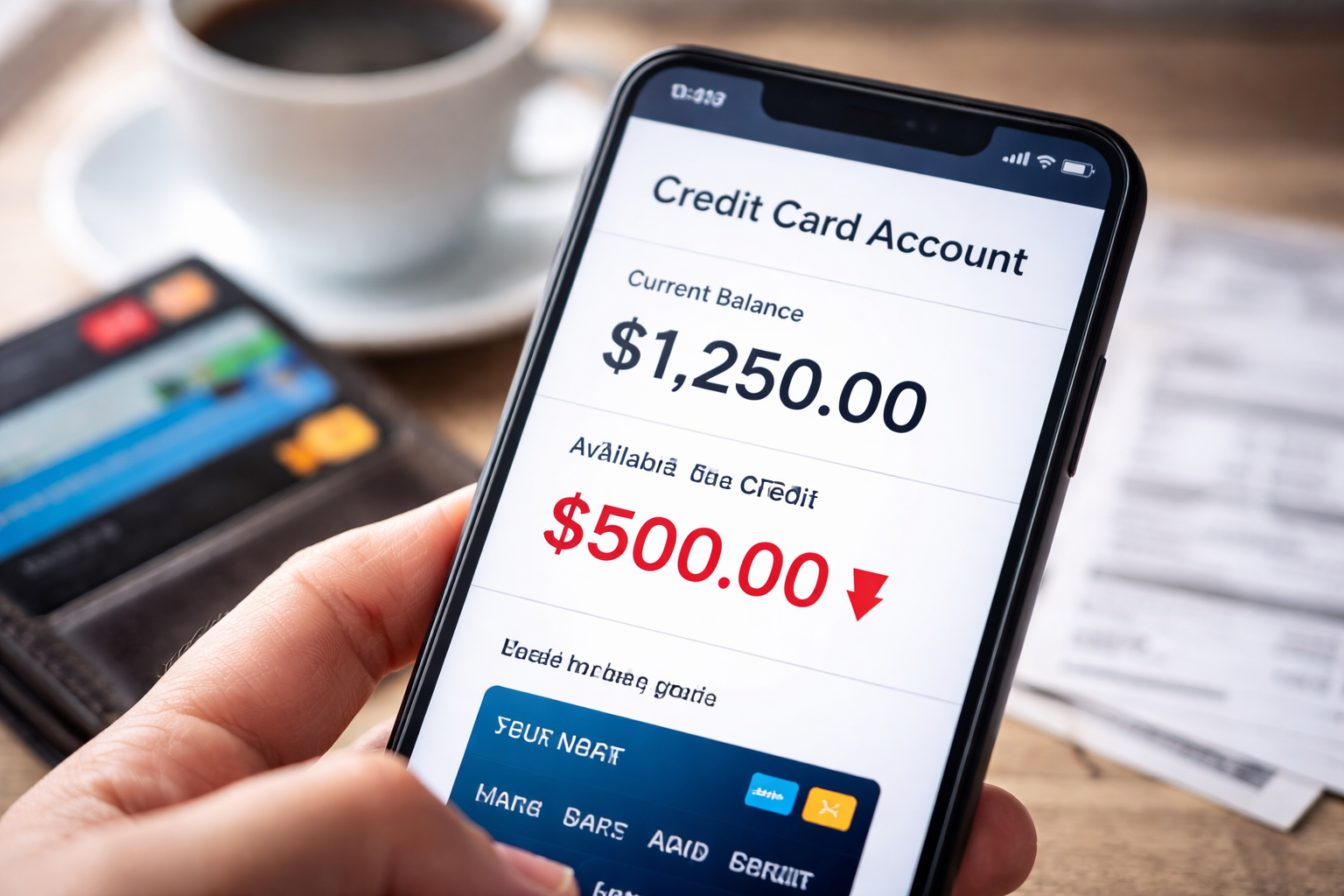
Credit Card Available Credit Reduced Without Balance Increase was the exact phrase I searched the minute I opened my card app and realized something was off. The balance looked normal. No big new purchase had posted. Nothing in the recent activity explained the drop. But the available credit was suddenly lower, enough to make the next purchase fail if I tried to use the card again. That is the moment this problem becomes real: the account looks fine on the surface, but your usable credit has already been reduced.
What makes this situation so frustrating is how invisible it feels. If the balance had gone up, at least there would be a clear reason. If a charge had posted twice, that would be obvious too. But when Credit Card Available Credit Reduced Without Balance Increase shows up, it often feels like the card issuer or merchant has quietly taken part of the limit without leaving a clear trail. In many cases, that is not exactly what happened, but it is close enough from the consumer side: part of the credit line has been tied up somewhere inside the system before the normal statement balance catches up.
If this started after recent purchase activity, the closest hub for understanding hidden processing behavior is below.
Why this happens before the balance changes
Credit Card Available Credit Reduced Without Balance Increase usually happens because the card system does not work in a single step. There is often a gap between when credit is reserved and when a transaction officially posts. During that gap, available credit can drop while the balance remains unchanged.
That gap is where most people get confused. The credit line is not managed only by posted transactions. It is also affected by internal reservations, pending authorizations, merchant settlement timing, fraud controls, and risk-review behavior. The issuer may already be treating part of your limit as spoken for even though the statement balance has not yet moved.
From a consumer perspective, it feels like missing credit. From a system perspective, it is often reserved credit.
The most common case branches
Credit Card Available Credit Reduced Without Balance Increase usually falls into one of several distinct branches. Knowing which branch matches your situation matters because the fix is different in each one.
- You may see no posted charge at all
- You may see only a pending transaction
- The hold amount may be higher than the final amount
- The credit line stays reduced until settlement or expiration
- Common with hotels and car rentals
- Common with merchants that adjust tips or final totals
- Common when part of an order ships now and part later
- Recent unusual spending can trigger this
- Large payments followed by fast spending can trigger this
- Multiple disputes or prior account irregularities can trigger this
- Fraud screening can trigger this even when no fraud is ultimately found
How to tell which branch matches your situation
If Credit Card Available Credit Reduced Without Balance Increase showed up today, the fastest way to narrow it down is to compare timing, merchant type, and recent account activity.
- If you used the card at a hotel, gas pump, restaurant, travel site, rental counter, or delivery platform, authorization is the first suspect.
- If you made a large payment recently and then tried to spend heavily, issuer controls become more likely.
- If you had a declined transaction, retried checkout several times, or changed an online order, duplicate or refreshed authorization is more likely.
- If you recently disputed charges, got a temporary credit, or had the account reviewed, internal reserve behavior becomes more likely.
The best self-check is not just “what posted,” but “what happened on the account in the last three to five days.”
That is where the hidden explanation usually lives.
What the issuer is often seeing that you are not
When consumers face Credit Card Available Credit Reduced Without Balance Increase, they usually look at two visible numbers: balance and available credit. The issuer is often looking at far more than that.
Internally, card systems may track:
- Open authorizations not yet settled
- Partial reversals not yet finalized
- Merchant category risk patterns
- Velocity of recent spending
- Payment return risk
- Fraud score changes
- Temporary account controls
That means a representative may say the balance is correct while still not immediately explaining why available credit is lower. The rep may not even see the issue in the same screen the consumer sees. This is why vague calls often go nowhere: “my credit is missing” is not as useful as “my available credit dropped without a balance increase and I need to know whether there is an open authorization or internal hold.”
If you think the issuer may be reacting to account-review behavior rather than a merchant hold, this background guide is the best fit.
When the merchant is the real cause
In many cases, the issuer gets blamed first even though the merchant created the problem. Credit Card Available Credit Reduced Without Balance Increase often begins at the merchant side because the merchant requested the hold, refreshed it, or delayed settlement.
Examples include:
- A gas station pre-authorizes more than the fuel total
- A hotel places room, incidentals, and refresh holds
- An online store checks inventory and re-authorizes after edits
- A restaurant adjusts the total after tip entry
- A subscription service retries billing after a failed attempt
In these situations, calling the issuer is still useful, but the issuer may not be able to force an immediate release unless the merchant sends the correct reversal signal. That is why some holds disappear quickly while others linger.
When the issuer is the real cause
There are also cases where the merchant did nothing unusual and Credit Card Available Credit Reduced Without Balance Increase comes from the issuer side. This is more likely when the account has recent odd patterns, such as a large payment, a returned payment history, repeated disputed charges, or rapid spending on categories associated with higher fraud screening.
The issuer may not call it a “freeze” or “restriction.” Instead, part of the line simply becomes less available. The user experiences reduced buying power without a clean explanation. That is why this situation sometimes overlaps with soft blocks, system holds, or quiet account reviews.
When the missing available credit seems tied to broader account behavior, a related article that can help is below.
What your rights usually look like here
Credit Card Available Credit Reduced Without Balance Increase is not always a classic billing-error situation. Often it is an operational problem involving holds, authorizations, or internal controls rather than a posted statement error. That distinction matters because the path to resolution may be more practical than formal.
Still, consumers do have the right to ask for accurate account information and clear explanations of posted charges and dispute-related activity. If a hold becomes excessive, lasts unreasonably long, or turns into a posting problem, documentation becomes important very quickly.
For official consumer guidance on credit card disputes and account issues, see the Consumer Financial Protection Bureau below.
Consumer Financial Protection Bureau – Credit Card Disputes
The exact steps that usually work
If Credit Card Available Credit Reduced Without Balance Increase is happening on your card, handle it in this order.
- First, review all pending transactions and not just posted ones.
- Second, identify any recent merchant categories known for holds.
- Third, compare today’s available credit drop to any recent purchase amounts.
- Fourth, contact the issuer and ask whether there is an open authorization, duplicate authorization, or internal account hold.
- Fifth, if a specific merchant caused it, contact the merchant and request prompt authorization release if the purchase was canceled or adjusted.
When you call, keep the explanation direct:
“My available credit dropped, but my balance did not increase. Please check whether there is an open authorization, duplicate authorization, refreshed hold, or internal reserve affecting available credit.”
This phrasing usually gets you a better answer than simply saying the app looks wrong.
Mistakes that make this worse
Some reactions make Credit Card Available Credit Reduced Without Balance Increase harder to untangle.
- Retrying the same purchase several times can create additional authorizations
- Using another checkout variation with the same merchant can stack holds
- Assuming the issue is fixed because a pending line disappears can be misleading
- Ignoring it for too long can make reconstruction harder if charges later post incorrectly
Another common mistake is paying extra money immediately without understanding the cause. If the issue is a merchant hold or internal reserve, paying more may not restore usable credit right away.
Key Takeaways
- Credit Card Available Credit Reduced Without Balance Increase usually means part of the limit is reserved somewhere in the system.
- The most common causes are merchant authorizations, refreshed holds, and issuer risk controls.
- The balance can stay unchanged while available credit drops because authorization and posting are separate stages.
- The right call is to identify whether the cause is merchant-side or issuer-side before taking action.
- Fast, specific wording with the issuer improves the chance of getting a real answer.
FAQ
Can Credit Card Available Credit Reduced Without Balance Increase fix itself?
Yes. If the cause is a normal authorization hold, it often resolves once the transaction posts or expires.
How long can this last?
Some holds clear within a day or two. Others, especially hotel, travel, or adjusted-order holds, can last several days longer.
Does this always mean fraud?
No. Fraud is only one possibility. Many cases are ordinary merchant authorization behavior or issuer risk screening rather than unauthorized use.
Should I dispute it immediately?
Not usually at the first moment unless there is a clearly unauthorized transaction. Many cases need hold investigation first, not an immediate formal dispute.
Recommended Reading
If this issue turns into a payment-related recovery problem and your spending power still does not return even after money moves through the account, read the next guide below.
Credit Card Available Credit Reduced Without Balance Increase is one of those problems that feels minor for the first few minutes and serious the moment a real purchase gets blocked. The reason it is so disruptive is not just the lower number. It is the uncertainty. You cannot tell at a glance whether the issue is temporary, merchant-created, system-created, or the start of a broader account restriction. The fastest way to regain control is to identify which bucket the missing credit is sitting in before you let the situation drift.
Do not wait for the next decline to confirm it is real. Review the last few days of activity right now, match the missing amount to any recent merchant behavior, and call the issuer using precise hold-and-reserve language. If a merchant cancellation or adjusted order is involved, contact that merchant the same day and ask for authorization release. That is the cleanest next step, and it gives you the best chance of getting your available credit back before the problem turns into a bigger one.