
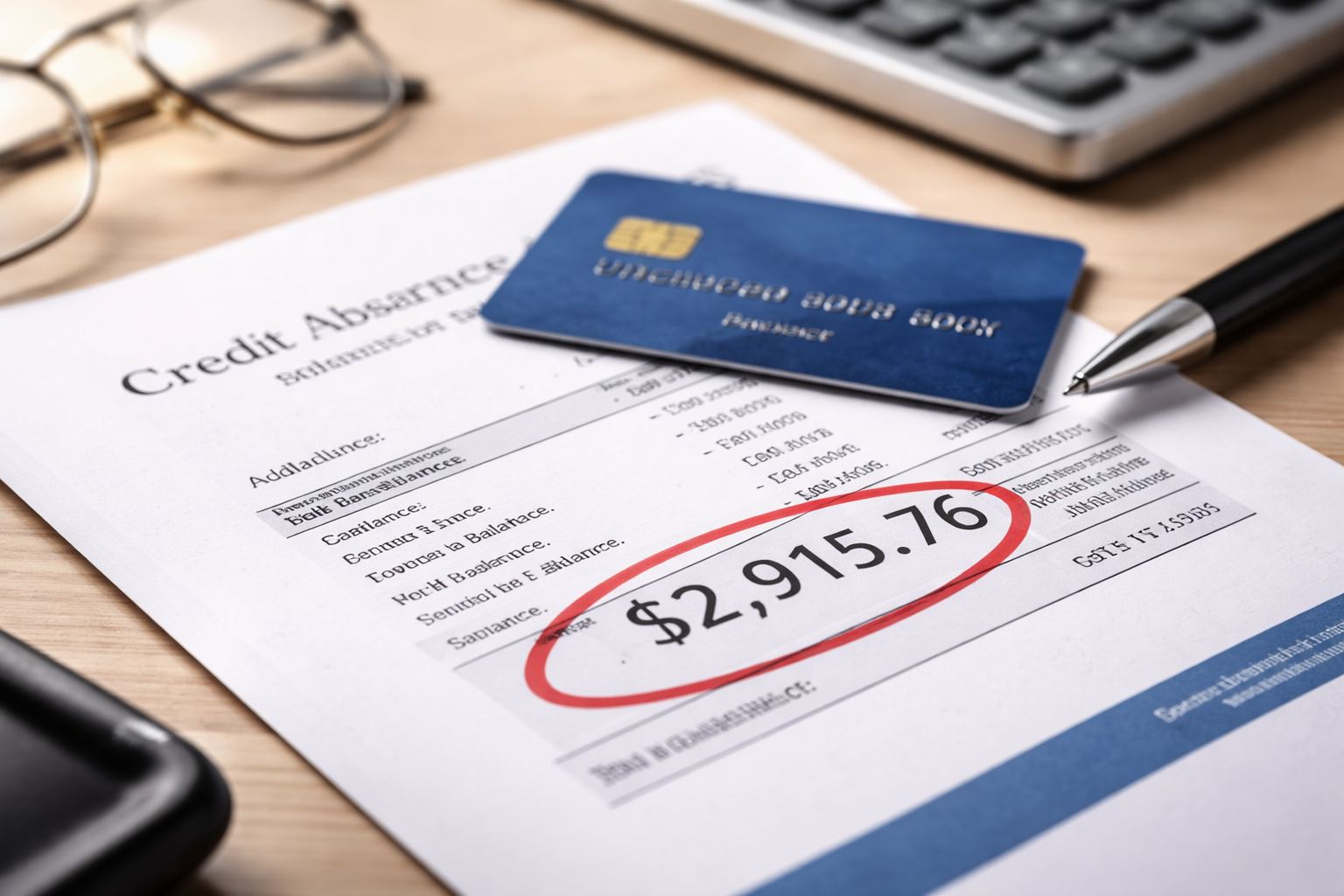
Credit card statement balance increased after payment posted was the exact thought that hit me when I opened the app again a few hours later. The payment had already moved out of my bank. The card account showed it as posted. I was expecting relief, or at least a smaller number. Instead, the balance was higher. Not slightly confusing. Higher. Enough to make me stop and look at every line twice.
At first, I assumed I had refreshed too early. Then I checked again. Same result. The payment was there, but the account no longer looked like a simple payment issue. It looked like the system had kept moving after my money landed. That is the part people usually do not see. Credit card statement balance increased after payment posted can look irrational from the customer side, but from the issuer side, several posting events may still be unfolding behind the screen.
Credit card statement balance increased after payment posted is rarely a random glitch. In most real situations, the payment posted correctly, but something else was added, finalized, reclassified, or recalculated after the payment hit the account. If you identify that second event quickly, the problem is usually manageable. If you do not, it can turn into unnecessary interest, incorrect minimum payment pressure, a past-due flag, or a dispute that gets harder to prove later.
Before you do anything else, it helps to understand how these balance problems show up on statements in the first place. This hub is the best place to start:
Why the number can go up after a posted payment
Credit card statement balance increased after payment posted usually means you are looking at overlapping timelines, not one clean event. Most people think in a straight line: make payment, balance drops, problem solved. Card systems do not always work in that order. They separate payment posting, transaction finalization, interest accrual, fee assessment, statement closing, and available credit updates into different steps.
That means a payment can post today while another charge finalizes later the same day, or interest can be added after the payment because the grace period was already lost. In some accounts, a refund may still be pending while a purchase has already fully posted. In others, a prior temporary credit may be removed. Credit card statement balance increased after payment posted often comes from these moving parts crossing each other at the wrong moment.
What usually causes it:
• A pending transaction becomes a posted transaction after your payment
• Interest is assessed after the payment because the full statement balance was not paid
• A fee posts after the payment, such as an annual fee or late fee
• A previous credit, adjustment, or merchant reversal is removed
• Your payment was applied to an older balance bucket first, not where you expected
• The statement cut happened around the same time, changing what number you are comparing
The biggest mistake is assuming the balance number represents one moment in time. It often reflects multiple system events layered together.
The situations that confuse people most
Credit card statement balance increased after payment posted tends to happen in a handful of recognizable patterns. The faster you match your account to the right pattern, the faster you can fix it.
Situation 1: You paid while charges were still pending
This is one of the most common explanations. You made a payment based on the balance you saw, but one or more recent purchases had not fully posted yet. When those purchases finalized, the balance rose after the payment. In this version, the payment itself is not wrong. Your timeline is just incomplete.
Situation 2: You paid after the grace period was already effectively lost
If the full statement balance was not paid by the due date in a prior cycle, interest may continue to accrue on new purchases and remaining balances. You make a payment, feel caught up, then the system adds trailing interest. The balance rises and it feels like the payment did nothing, even though it did.
Situation 3: Your payment was applied to a different part of the balance
Customers often expect the payment to reduce the newest purchases first. Many issuers apply payments according to statement timing and regulatory rules. That can make current charges remain visible while the payment reduced prior statement amounts, fees, or interest categories first.
Situation 4: A fee or adjustment posted right after the payment
Annual fees, late fees, promotional balance transfer fees, or a corrected merchant amount can appear after the payment posts. The customer sees the payment and expects a lower number, but the new fee makes the balance look larger than expected.
Situation 5: You are comparing statement balance and current balance as if they are the same
This happens constantly. A statement balance is a snapshot from the close date. A current balance includes later activity. If you pay the statement amount and then look at a current balance with new posted items, it can look like the balance “increased after payment” even when the statement itself was handled correctly.
If payment allocation is part of your issue, this supporting article fits naturally with the situation above:
What the issuer sees behind the screen
Credit card statement balance increased after payment posted feels personal because you are staring at one number. The issuer is not. Internally, they are tracking separate ledgers and status layers: statement balance, current balance, pending transactions, posted transactions, accrued interest, promotional buckets, cash advances, fees, and available credit. Those do not always update in a customer-friendly order.
For example, a payment may be marked posted while available credit still waits for fraud review or overnight batch processing. A transaction you thought was already counted may still be pending and not included in the statement comparison you are mentally making. Credit card statement balance increased after payment posted can happen because the customer dashboard is presenting the result of several internal queues, not one final settled picture.
The card issuer usually does not ask, “Did your balance go down after payment?” It asks, “Which categories posted, in what order, and on which dates?”
That is why vague questions to customer service often go nowhere. If you ask, “Why is my balance wrong?” you may get a generic answer. If you ask, “What posted after my payment, and what date did each item hit the ledger?” the call becomes much more productive.
How to tell which version you are dealing with
Credit card statement balance increased after payment posted should be diagnosed like a timeline problem. Do not start by guessing. Start by reconstructing the sequence.
Quick self-check timeline:
1. What exact date and time did the payment move from your bank?
2. What exact date does the card issuer show as “posted”?
3. Did any pending transactions become posted after that?
4. Did your statement close around the same time?
5. Was interest added after the payment?
6. Did a fee, corrected charge, or reversed credit appear?
7. Are you comparing current balance to statement balance?
If you go through that checklist line by line, most mystery disappears. Credit card statement balance increased after payment posted is usually not solved by emotion or by making another payment quickly. It is solved by identifying which event hit after the payment and whether that event was valid.
When the increase is probably normal and when it is not
Some versions of credit card statement balance increased after payment posted are frustrating but normal. Others deserve immediate escalation.
Usually normal:
• Pending purchases posted after your payment
• Interest posted because you did not pay the full statement balance
• A new billing cycle created a different current balance than you expected
Needs closer review:
• The payment amount appears posted but is not reducing any balance category
• A fee was charged with no visible triggering event
• A refund or temporary credit disappeared without explanation
• The balance increased due to a merchant amount change you do not recognize
• Customer service cannot tell you what posted after the payment
If interest is the hidden reason, this is the most relevant mid-article follow-up:
What to do in the first 24 hours
If you are dealing with credit card statement balance increased after payment posted, the first day matters. Not because the issue becomes permanent immediately, but because records change and memory gets messy fast.
Take screenshots of the payment confirmation, the balance before and after, and every transaction line that appears near the payment date. Save your bank record showing the money left your account. Then call the issuer and keep the conversation narrow. Ask for the ledger sequence, not a general explanation.
Use this script:
“My payment posted on [date]. After that, my balance increased. Please identify every item that posted after the payment, the posting date of each item, and how my payment was allocated across statement balance, interest, fees, and current charges.”
That wording forces the representative to explain the timeline instead of repeating generic balance language.
If the representative cannot explain the increase clearly, ask for a secure message summary or written breakdown. If the problem involves an error you can document, ask about the issuer’s billing error dispute process and applicable time window. For official consumer guidance, use this one source:
What people do wrong when they panic
Credit card statement balance increased after payment posted often becomes more expensive because people react too fast in the wrong direction.
One common mistake is sending another payment immediately, hoping to force the number down. Sometimes that works by coincidence, but sometimes it masks the real problem and makes reconciliation harder later. Another mistake is waiting silently until the next statement, assuming the system will sort itself out. That delay can let interest accumulate or let a valid dispute window start running without you.
Some people also focus only on available credit, not the balance categories underneath it. That leads to confusion, especially when available credit lags behind the payment or when risk controls temporarily slow updates. Credit card statement balance increased after payment posted should be handled as a documentation issue first, payment issue second.
Key Takeaways
- Credit card statement balance increased after payment posted usually means another event hit after the payment, not that the payment vanished
- Pending purchases, interest, fees, statement-cycle timing, and payment allocation are the most common causes
- You need posting dates, not just transaction descriptions
- The right question is what posted after the payment and how the payment was allocated
- Do not send a second payment blindly before understanding the cause
FAQ
Why did my credit card balance go up after my payment posted?
Usually because a purchase, interest charge, fee, or adjustment posted after the payment. The payment may still have been applied correctly.
Does this mean my payment failed?
Not necessarily. If the payment shows as posted and your bank shows the money left, the more likely issue is a second event posting afterward.
Can interest still be charged after I make a payment?
Yes. If you did not pay the full statement balance or had already lost the grace period, trailing interest may still be added.
Should I dispute it right away?
First confirm what posted after the payment. If the issuer cannot explain the increase or the increase is clearly wrong, then escalate through the billing error process.
Will this hurt my credit?
It can if the confusion causes a missed due date, a past-due mark, or a higher reported utilization. That is why quick documentation matters.
What to read next so this does not keep happening
If this problem caught you once, the next best step is understanding the mechanics behind payment timing and statement updates before it happens again. Read this next so you can recognize the pattern earlier the next time your account screen looks wrong:
Credit card statement balance increased after payment posted is stressful because the number looks backward. But backward-looking numbers often come from forward-moving systems. Once you separate payment date, posting date, statement date, and later-added charges, the situation becomes much easier to control.
The most important thing now is simple. Do not leave this as a vague feeling that your card account looks wrong. Pull the dates, save the screenshots, ask what posted after the payment, and force the timeline into the open. That is how you stop a confusing balance change from turning into a bigger account problem later.