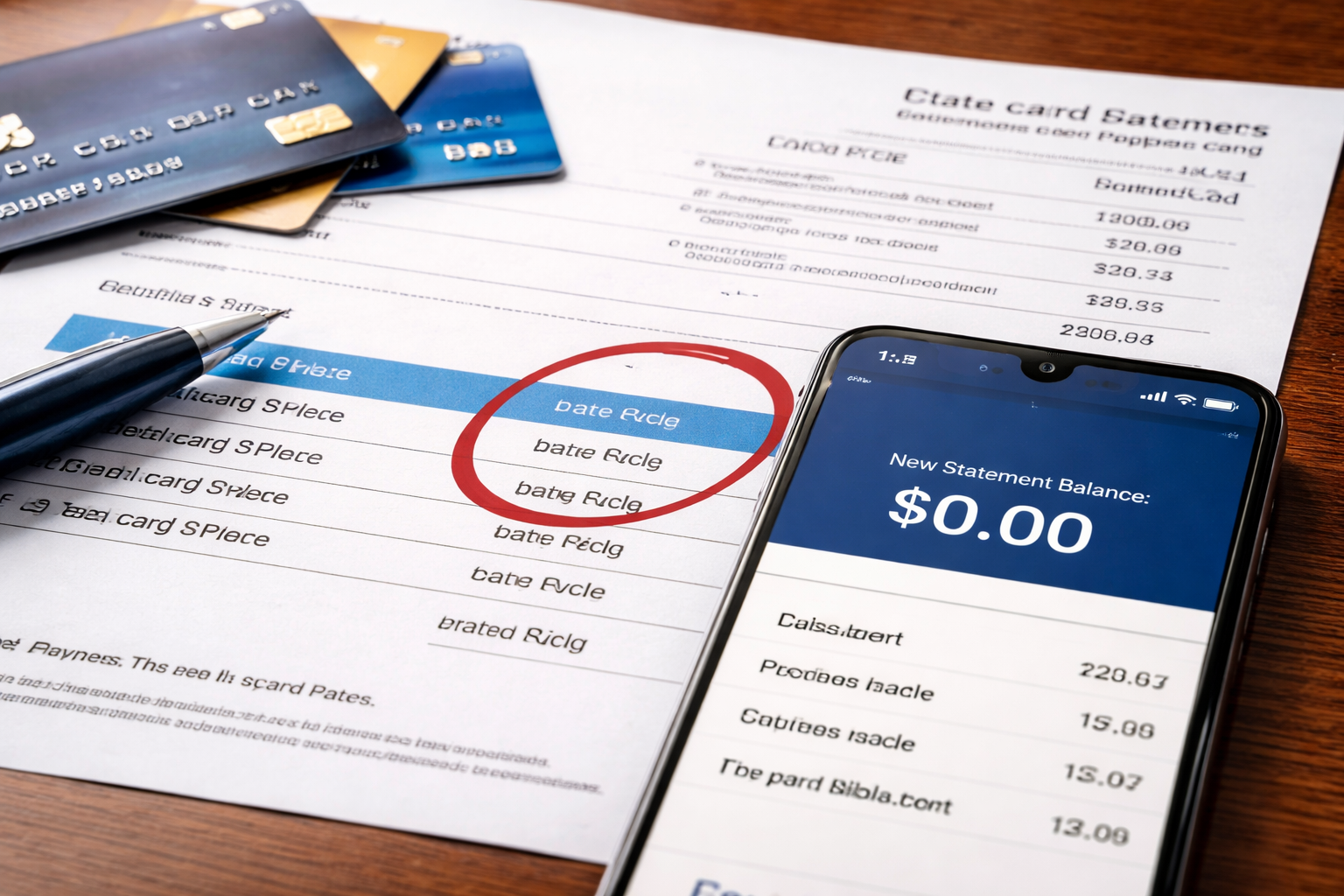
Credit Card Payment Applied to Wrong Statement Cycle was the phrase I ended up typing after staring at my account screen twice in the same night. I had made the payment. The bank had already taken the money. But when the new statement closed, the balance still looked too high, the minimum due did not move the way I expected, and the account looked like my payment had landed in the wrong month instead of the month I was trying to protect.
That is what makes this problem so frustrating. It does not always look like a missing payment. Sometimes it looks worse than that. It looks like you paid, but the account still moved forward as if you did not pay at the right time for the statement that mattered. When that happens, the real issue is often not whether the payment exists, but where the issuer applied it inside the billing cycle timeline.
If you are dealing with Credit Card Payment Applied to Wrong Statement Cycle, start by understanding the difference between a payment date, a posting date, and a statement closing date. That is where this usually breaks apart for consumers. Before you go deeper into related billing patterns, review the broader statement-error framework here:
This guide helps you compare how statement problems appear when the account activity and the statement cycle do not line up the way you expected.
Key Takeaways
- Credit Card Payment Applied to Wrong Statement Cycle usually happens when the payment was real, but the statement had already closed or the issuer allocated the payment to the next cycle view.
- The most common damage is not just confusion. It can lead to extra interest, a past-due display, or a minimum payment that still appears due.
- You should not rely only on the transaction leaving your bank account. What matters is how the card issuer dated and applied it inside the statement period.
- The fastest way to fix this is to document the payment confirmation, statement close date, due date, and the exact day the issuer marked the payment as received.
- If the statement should have reflected the payment but did not, escalate it as a billing error in writing, not just by phone.
Why this hits harder than people expect
When Credit Card Payment Applied to Wrong Statement Cycle happens, most people think the worst part is seeing the wrong balance. It is not. The worst part is what follows. The statement can show a higher carried balance than expected. Interest can appear on the next cycle. The minimum due can remain open. In some situations, a consumer believes everything is fine because the payment cleared the checking account, then finds out days later that the issuer treated it as too late for the statement that just closed.
That timing gap matters because the statement is not a live snapshot of your intentions. It is a closed record based on how the system froze the cycle. If your payment landed after that freeze point, or if the issuer recognized it in the next cycle rather than the one you were trying to catch, the account can look wrong even when money already moved.
Credit Card Payment Applied to Wrong Statement Cycle is especially common when someone pays near the due date, near the statement close date, on a weekend, after a cutoff hour, or through an external bank transfer instead of an immediate same-day issuer payment channel.
Quick self-check
If your situation matches two or more of these, you are probably dealing with cycle placement rather than a missing payment:
- The payment left your bank, but the new statement still looks high
- The minimum due stayed open even after you paid
- The issuer says the payment was received, but not for the statement you meant to cover
- The payment was made right before the statement closed
- Interest appeared even though you thought you paid in time
What usually causes it
Credit Card Payment Applied to Wrong Statement Cycle usually comes from one of four patterns.
First, the payment was initiated on one day but posted on another. Consumers often focus on the day they clicked submit. The issuer often focuses on the day its system marked the payment as received and eligible for that cycle.
Second, the statement had already closed. In that situation, the payment can still be valid and timely for avoiding delinquency, but it may not reduce the balance shown on the just-issued statement.
Third, the payment method created delay. A same-bank payment portal, external ACH pull, bank bill-pay transfer, and debit-card-based payment do not always hit the issuer timeline the same way. That can make Credit Card Payment Applied to Wrong Statement Cycle look like an error when part of it is a system timing issue.
Fourth, there may be an actual servicing error. The issuer may have credited the payment, but assigned it to the next cycle ledger, failed to align it with the correct cutoff, or left the account display inconsistent across the statement and account activity view.
How the issuer often sees it
From the issuer side, this is not always treated as a dramatic account failure. Sometimes it is treated as a sequencing issue. Their system asks: when was the payment authorized, when was it received, when did the cycle close, and which balance was already locked into the statement? That is why the customer service agent may tell you the payment posted correctly even while you are looking at a statement that seems obviously wrong.
That answer feels evasive, but it often means the issuer is separating two questions: was the payment real, and did it belong to the statement cycle you expected? Those are not always the same thing.
This is where many consumers lose ground. They argue only that they paid. The stronger argument is narrower and better documented: the payment should have been reflected in the cycle, minimum due, or fee treatment shown on the statement because of the issuer’s own timing or posting rules.
If your issue is close to a statement timing mismatch, this related guide can help you compare the pattern:
Read this if your payment seems to exist, but the statement locked before the account display caught up.
Where consumers get hurt
Credit Card Payment Applied to Wrong Statement Cycle can create damage in several different ways, and your next step depends on which one you are actually facing.
If the payment reduced available credit but not the statement problem
This usually means the issuer recognizes the money but not in the place you expected. Focus on statement date, due date, and payment receipt timestamp.
If the payment posted but interest still appeared
This may mean the payment missed the cycle needed to preserve the grace period or reduce the statement balance in time. You need the previous statement, current statement, and payment confirmation together.
If the account now shows past due or late
This is more serious. You need to challenge the date treatment immediately and ask whether the issuer treated the payment as received after the cutoff even though you submitted it earlier.
If the issuer says nothing is wrong
Do not stop at the first call. Ask them to explain exactly which cycle the payment was applied to, the time stamp used, and why the statement did not reflect it the way the account history suggested it would.
What to gather before you call
Before you contact the issuer, build a small file. That sounds simple, but it changes the conversation. Credit Card Payment Applied to Wrong Statement Cycle is much easier to fix when you are not speaking in general terms.
- The prior statement showing the balance and due date
- The current statement showing the problem
- The payment confirmation number
- A screenshot of the payment date and amount
- Your bank account record showing when funds left
- Any issuer email or message confirming receipt
- A timeline you wrote out yourself in one paragraph
Keep that timeline short: when the statement closed, when you paid, when the funds left, when the issuer marked the payment posted, and what part of the statement now looks wrong. That one paragraph often works better than ten minutes of emotional explanation.
How to challenge it the right way
When you call, do not open with “my payment disappeared.” That may send the issue into the wrong bucket. Say this instead: “My payment was received, but it appears to have been applied to the wrong statement cycle, and my statement, minimum due, or interest treatment does not match the payment timeline.” That wording is closer to the real issue.
Ask these questions clearly:
- What date and time did you mark the payment as received?
- Which statement cycle did you apply it to?
- Was there a cutoff time that changed its treatment?
- Did the payment count toward the statement balance I was trying to cover?
- If not, why not?
- Were any interest charges or late fees caused by that cycle placement?
Credit Card Payment Applied to Wrong Statement Cycle should not be handled like a vague complaint. It should be handled like a timeline dispute. That is how you force a precise answer.
If the first representative gives you only general language, escalate. Ask for account services, billing research, or a supervisor who can explain statement-cycle allocation rather than just confirming that money was received.
When it becomes a billing error
Sometimes this is just unpleasant timing. Sometimes it is more than that. If the statement should have reflected the payment differently, or if fees or finance charges were added because the issuer handled the cycle incorrectly, then you may be dealing with a billing-error issue rather than just a confusing display problem. The CFPB explains how consumers can address mistakes in a credit card bill here: How to fix mistakes in your credit card bill.
That is why you should not stop with a phone call if the stakes are real. If Credit Card Payment Applied to Wrong Statement Cycle caused a fee, interest, or an inaccurate past-due treatment, send a written billing error notice through the issuer’s designated channel and keep a copy.
Phone calls solve misunderstandings. Written notices protect your position when the account record itself may be wrong.
Mistakes that make this worse
The biggest mistake is paying again before understanding what happened. Some people panic when they see the wrong statement cycle and send a second payment immediately. That can create cash-flow stress, overdraft risk, or a new dispute later if the first payment was actually valid but poorly displayed.
The second mistake is arguing from memory instead of documents. Credit Card Payment Applied to Wrong Statement Cycle is one of those problems where a clean timeline beats frustration every time.
The third mistake is focusing only on the balance and ignoring the fee and reporting consequences. Even if the balance corrects later, you still need to look for interest, late charges, and any delinquency notation that should not be there.
The fourth mistake is waiting through another statement cycle hoping it will work itself out. Sometimes it does. But sometimes the account rolls forward with the same error logic and becomes harder to unwind.
What to do today
If you are in the middle of Credit Card Payment Applied to Wrong Statement Cycle, do these steps today, in order.
- Download the last two statements and the payment confirmation.
- Write a five-line timeline with dates, amounts, and what looks wrong.
- Call the issuer and ask which cycle the payment was applied to.
- Ask whether any fee, interest, or past-due status was triggered by that placement.
- If the explanation does not match your documents, send a written billing-error notice immediately.
- Check the next statement and your account status after the response.
For a broader understanding of how issuers process payments, statement timing, and account movement, this hub is the best next step:
Use this to compare your situation with other payment timing problems before the next cycle closes.
FAQ
Can Credit Card Payment Applied to Wrong Statement Cycle happen even if the money left my bank?
Yes. Money leaving your bank does not always mean the issuer treated the payment as part of the statement cycle you intended to affect.
Does this always mean the card issuer made a mistake?
No. Sometimes the statement had already closed or a cutoff time controlled the cycle treatment. But sometimes the issuer did apply the payment in a way that created an avoidable fee or statement error.
Should I make another payment right away?
Not automatically. First confirm whether the first payment was credited, which cycle it was applied to, and whether you are actually still short for the current due amount.
Can this lead to interest even when I paid?
Yes. If the payment did not land in the cycle you expected, interest can appear because the statement balance or grace-period logic was not preserved the way you assumed.
What if the issuer agrees the cycle treatment was wrong?
Ask them to correct the account, remove related fees or finance charges if applicable, and confirm in writing what was fixed.
Recommended Reading
If the payment issue starts turning into a fee, balance, or statement-display problem, this is the next article to read:
Read this next if the wrong cycle placement caused your required payment amount to look inflated or inaccurate.
Credit Card Payment Applied to Wrong Statement Cycle is one of those account problems that looks small at first and then quietly spreads into interest, fees, and stress because the timeline was never pinned down. The good news is that it is usually fixable when you stop treating it like a mystery and start treating it like a sequence problem with documents attached.
Do not wait for the next statement to see what happens. Pull the statements, match the payment timestamp against the statement close date, call the issuer, and if the explanation does not hold up, send the written notice now. The faster you lock the timeline down, the better your chance of stopping extra charges before they roll into another cycle.